
Technology and Mental Health
Technology & Mental Health
How do we let our kids explore and utilize technology while taking precautions to lessen impact on mental health and sleep?
Guiding your child to find the balance in healthy tech use is an important role you can play in their life. Technology helps kids learn, explore, and stay connected, but unmonitored use can disrupt their sleep and mental health. Parents play a key role in teaching healthy habits by setting clear boundaries—such as keeping devices out of bedrooms at night—and watching for red flags like shifts in mood or sleep patterns.
We hope you find the information in this month’s resources helpful. Please visit the Digital Wellness Homepage for additional resources.

Hyperconnected: How Life Online Affects Kids’ Mental Health and Well-Being
Screen Time for Kids: Phones, Social Media & Mental Health | Little Lessons w/ Dr. Lena van der List
-
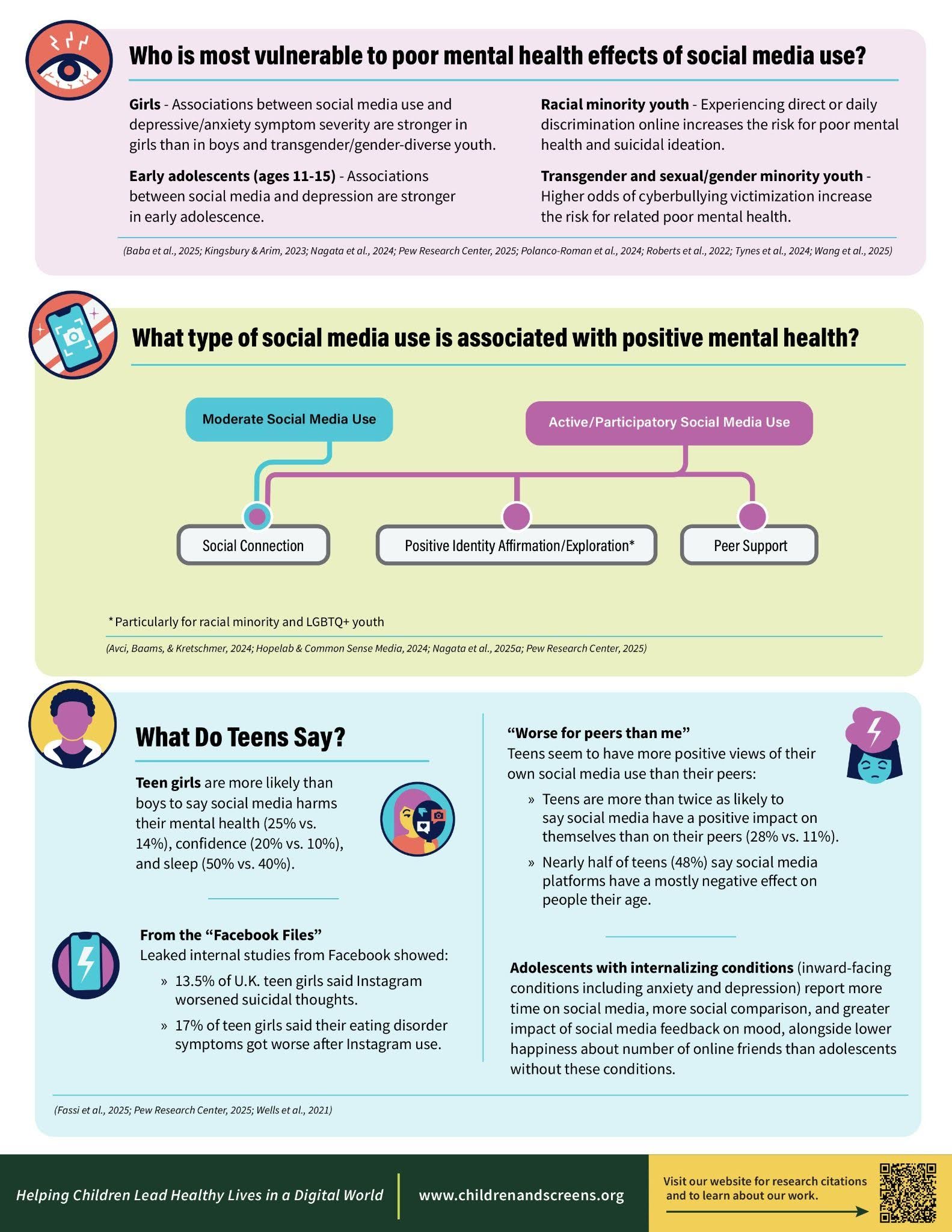
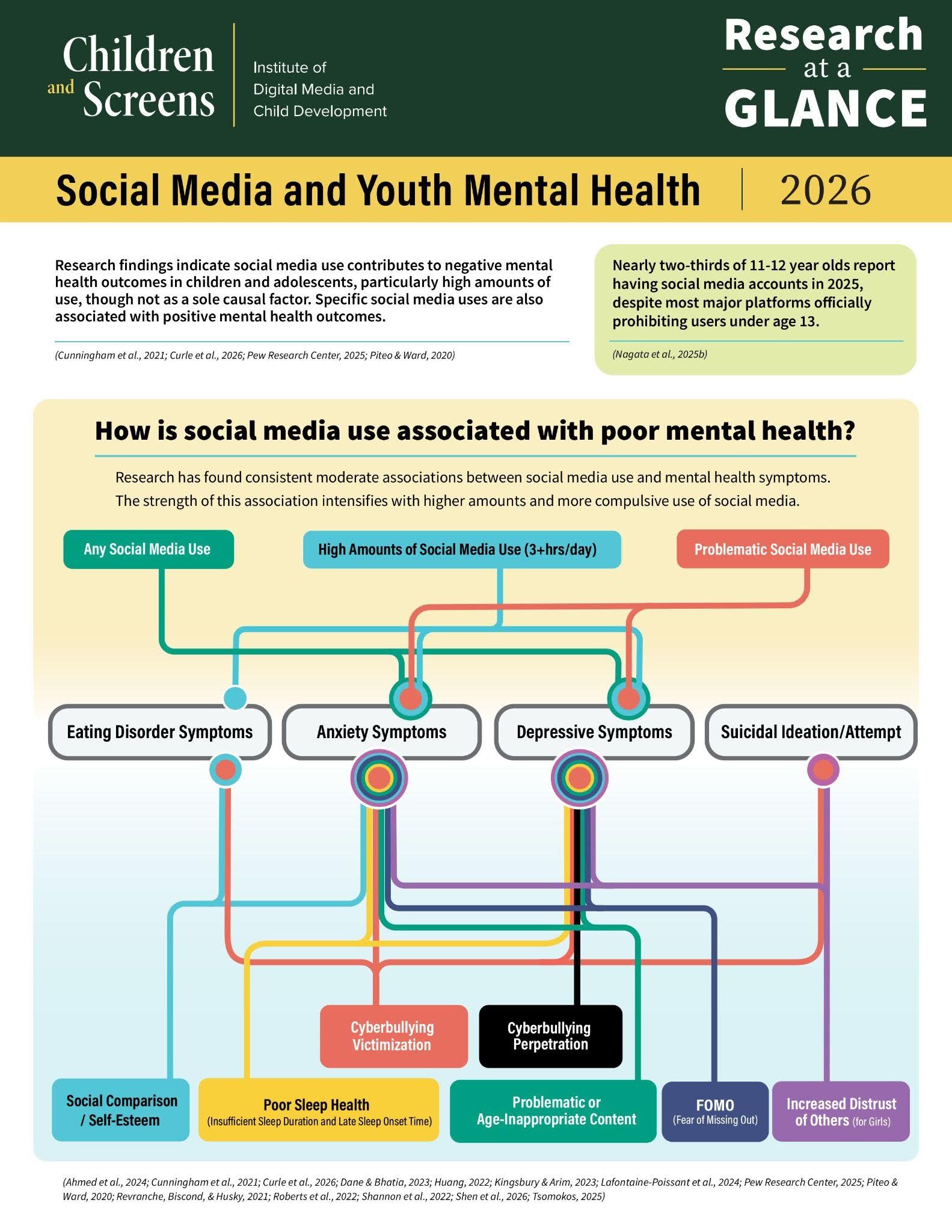
Technology can help kids connect, create, and learn. It can also add pressure, comparison, and stress. How kids use it, and how they feel afterward, matters as much as how long they use it.
-
- 45% of teens say they spend too much time on social media. 74% say what they see there makes them feel more connected to what’s going on in their friends’ lives. (Pew Research Center, 2025)
- 80% of parents say they are very comfortable talking with their teen about mental health. 52% of teens say they are very comfortable talking with a parent about their own. (Pew Research Center, 2025)
- Teens with high daily screen time were more likely to have depression symptoms (25.9% vs 9.5%) and anxiety symptoms (27.1% vs 12.3%) in the past 2 weeks compared with teens without high daily screen time. They were also more likely to report having infrequent social and emotional support (48.6% vs 35.1%) and insufficient peer support (37.0% vs 30.4%).
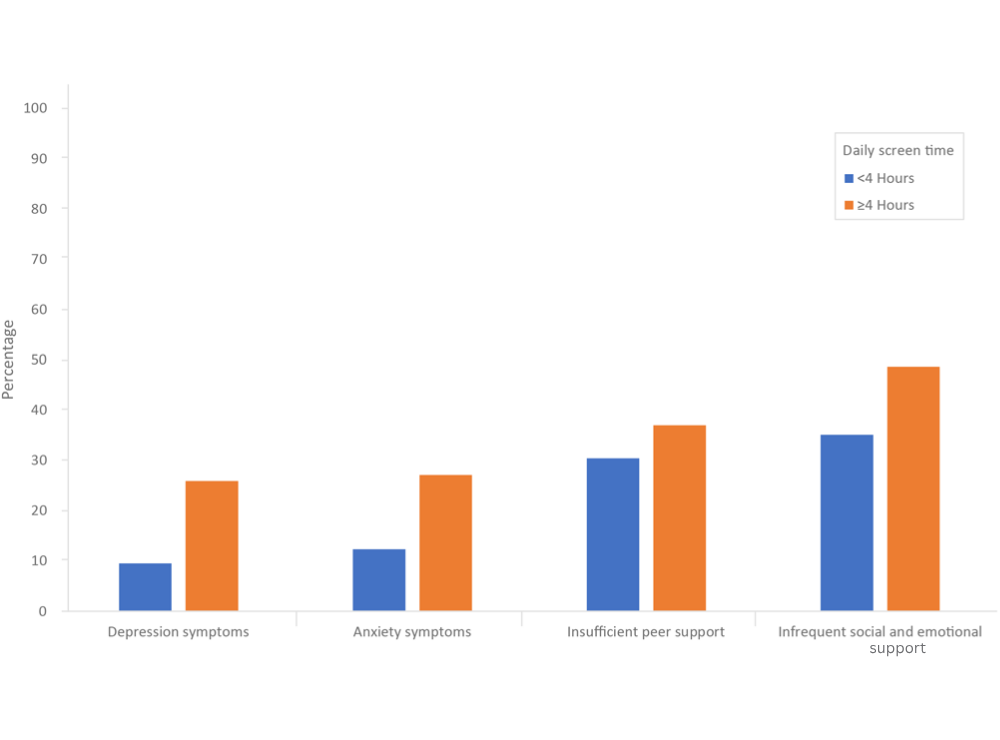
Prevalence of mental health and perceived support outcomes, by daily screen time use, United States, National Health Interview Survey-Teen, July 2021–December 2023. All values differed significantly from teens with less than 4 hours of daily screen time (P< .05) (CDC,2025) . Note: The CDC found that the difference in peer support was smaller once it accounted for differences in age, sex, race and ethnicity, family income, and parents’ education. The other differences shown held up. All of these are links, not proof that screens cause these outcomes.
-
- Start calm. Check your own reaction first. Parent panic can get in the way of the conversation.
- Ask what they get from being online. Connecting with friends and avoiding a stressful day call for different responses.
- Treat comparison as normal. It’s hard not to compare ourselves to others. Let them know it’s normal and share a time you felt it.
- Use a dimmer, not an on/off switch. Taking the phone away suddenly can cost you the conversation. A step-by-step approach can be more fruitful. Understand what is driving the emotion or use of the phone before you intervene by taking it away.
- Talk about mean comments. Remind your child that someone who typed a negative comment in a few seconds has probably moved on and help them figure out how to sit with their own feelings about the comment.
- Model it. Kids copy how we talk about ourselves and others, and how we use our own phones.
- Try phone-free times and places, and turn off notifications. See October's Digital Wellness Page for info on how to do this.
-
Social Emotional Learning in Digital Life - Family Conversations by Grade
-
Have specific questions? Chances are they’re answered here:
- American Academy of Pediatrics' Social Media and Youth Mental Health Portal
- Johns Hopkins Social Media and Mental Health Among Children and Teens Expert Q & A
- Create Your Own Family Media Plan
- Screen Time for Kids: Phones, Social Media & Mental Health | Little Lessons w/ Dr. Lena van der List
- How to Help Teens Manage the Effects of Social Media on Their Mental Health
Technology and Sleep
Sleep and screens are closely linked, and sleep affects mood, focus, and stress. Small changes at bedtime can make a difference.
What the Data Says
- Teens ages 13 to 18 need 8 to 10 hours of sleep. (Journal of Sleep Research review, 2023)
- 45% of teens say social media hurts their sleep. Girls say so more often than boys (50% vs 40%). (Pew Research Center, 2025)
- Approximately half (50.4%) of all teens had 4 or more hours of daily screen time. Teens with high daily screen time were more likely to be infrequently well-rested (59.9% vs 40.1%) and to have an irregular sleep routine (49.2% vs 29.2%)
What to Say
- Avoid using screens an hour before bedtime. Blue light emitted from screens can interfere with sleep. Consider using your device’s built in yellow shift feature:
- Have you and your family’s phone and other devices outside of the bedroom to limit distractions or the urge to check your phone.
- Prioritize sleep! Aim for the recommended amount of sleep for your age every night, with a consistent bedtime and waketime
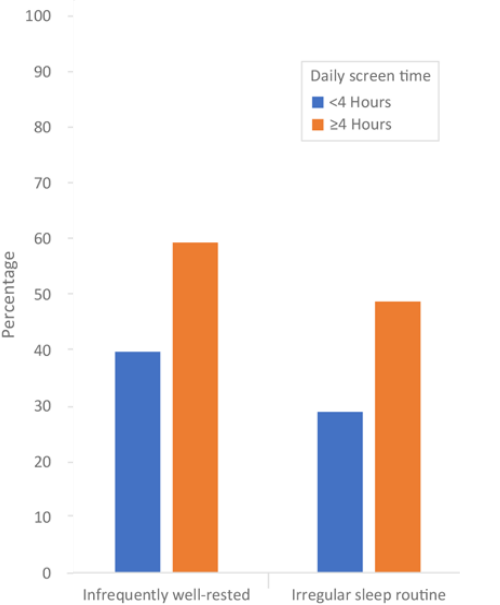
Prevalence of sleep, by daily screen time use, United States, National Health Interview Survey-Teen, July 2021–December 2023. All values differed significantly from teens with less than 4 hours of daily screen time. “Infrequently well-rested” means waking up well-rested only some days or never. “Irregular sleep routine” means the bedtime and wake time aren’t the same on most school day. Adapted from (CDC, 2025)
Sleep Tips
- Charge your phone and other devices outside of the bedroom to limit distractions or the urge to check your phone. Set up a central family charging station in the kitchen or living room where all devices spend the night.
- Avoid using social media an hour before bedtime. Blue light emitted from screens can interfere with sleep. Turn off all personal screens 60 to 90 minutes before bedtime to allow melatonin production to rise naturally.
- Prioritize sleep! Aim for the recommended amount of sleep every night, with a consistent bedtime routine.
- TVs, computers, and smartphones completely out of bedrooms, especially overnight.
- Use native device management tools like Apple Screen Time or Google Family Link to set hard daily limits and automatic app lockouts.
- Create a family media plan. Sit down with teens to co-create a media contract. They are much more likely to follow rules they helped establish.
- Establish a strict rule that screens only come out after sleep, physical activity, and homework or chores are completely finished.
- Model good habits. Children mirror parental behavior; practice turning off your own phone during meals and dedicated family time.
- Actively replace screen time by providing easy access to books, board games, sports equipment, or creative art supplies.


